
Where the candidates on your ballot stand on the Tijuana River pollution crisis — and how to make sure your vote counts.
Every active registered voter in San Diego County receives a ballot in the mail. Each link below goes to an official California or San Diego County elections site.
Election Day
Tuesday, November 3, 2026
| Ballots began going out to registered voters | October 5 |
| Official ballot drop boxes opened, daily through November 3 | October 4 |
| Voter registration deadline | October 19 |
| Conditional Voter Registration — register and vote in person at the Registrar’s office or any vote center | October 20 – November 3 |
| Early voting at select vote centers, 8 a.m. to 5 p.m. daily | from October 24 |
| Early voting at all vote centers, 8 a.m. to 5 p.m. daily | from October 31 |
| Election Day — vote centers and drop boxes open 7 a.m. to 8 p.m. Mailed ballots must be postmarked by this date | November 3 |
Dates from the San Diego County Registrar of Voters, confirmed October 20, 2026.
Thank you to every candidate who took part. The Tijuana River Coalition invited all candidates in these races to answer the same four questions about the public health crisis in the Tijuana River watershed, and to join a regional candidate forum on September 24, 2026. Written responses are published in full, unedited, exactly as they were submitted. Candidates who joined the forum but did not return the questionnaire are quoted from the recording, and marked as such. Candidates who did neither are named, so you can see the invitation went to everyone on your ballot.
San Diego City Council
Responded: Nicole Crosby
Did not respond: Richard Bailey
The Tijuana River crisis is one of the most pressing crises endangering public health and families across San Diego County. My district is home to many coastal areas that are vulnerable to pollution from the Tijuana River, including Point Loma, Ocean Beach, and Mission Beach. As a City Councilmember, I will use our City’s oversight powers to hold polluters accountable. I will also continue calling on our state and federal partners, including our next Governor, to treat this crisis with the concern and priority that our communities deserve.
I will support investment in our Parks and Rec Department and funding for partner non-profits for additional programming in the impacted neighborhoods to ensure that there are ample opportunities for our children and our community members to have access to recreation and resources.
The City of San Diego is not just the largest city in the county, it is the eighth largest city in the country. It is incumbent upon City leaders of our large city to be proactive in advocating for resources San Diegans need to be safe and thrive in our community. I’ve spent my career managing government budgets and securing grant funding. I will ensure City departments compete more aggressively for federal and state grants for roads, parks, infrastructure, public safety, and housing, funding other major cities already capture more of.
San Diegans deserve to have real communication from their elected leaders. Direct input from South Bay residents is essential to craft a plan to not just mitigate, but remedy the negative impacts of pollution that have plagued the region for decades. Stakeholder meetings are a collaborative way to reach the most vulnerable and underserved communities. In turn, the stakeholders are the bridge between a traditionally distant government and the neighbors who rely on them for trusted information.
San Diego City Council
Responded: Gerardo Ramirez
Spoke at the forum: Antonio Martinez
I lived on Servando Avenue in Nestor right next to the Tijuana River Valley for years. I didn’t learn about this crisis from a briefing or the news. I grew up breathing it. That’s why this is personal for me, and why it will be my top priority on day one. Within the City’s authority, I will do two things. First, I will make progress public so agencies are held accountable. In 2018, the City of San Diego and other local agencies sued the International Boundary and Water Commission (IBWC) to force action.
That pressure helped secure $300 million in federal funding in 2020, and the lawsuit was settled in 2022. That money kickstarted the expansion of the South Bay treatment plant, but now we have to make sure what needs to be built gets built, and on time. We can’t afford delays. I will push for regular, public reporting on the plant expansion and on Mexico’s commitments under Minute 333. Residents should be able to easily see every deadline and whether it was met. Second, I will bring the agencies to us.
I will push for hearings in San Ysidro and Nestor where the IBWC, the Environmental Protection Agency and the County answer residents’ questions directly.
Our kids and families shouldn’t have to give up the outdoors because of pollution they didn’t cause. In the short term, I will support investments in indoor activities with proper air filtration at our recreation centers and schools, so programs can continue when conditions are unsafe. But short-term fixes alone won’t solve this. The real answer is stopping the pollution at its source. That means keeping pressure on both the U.S. and Mexican federal governments to deliver the projects they’ve already agreed to, on time.
It also means planning for the future. It also means planning for the future‚ because Tijuana’s population is expected to reach 2.4 million people by 2050. This means the treatment capacity will have to be increased.
Real progress started when local governments stopped waiting and forced the issue. The 2018 lawsuits and a united push from our region helped bring federal dollars to the table. Local leaders have the platform to keep that pressure on, and I will. With over ten years at City Hall, I know how to work across agencies and borders. I’m in close communication with Mexican Congressman Gil Herrera, who represents part of Tijuana. Together we toured San Antonio de los Buenos, Tijuana’s main treatment plant.
It was encouraging to see it running, but my message to Mexican leaders was clear, it’s not enough. As Tijuana grows, that plant’s capacity has to grow with it. We are one region, and we depend on each other. Every time our leaders meet, this issue has to be front and center. Partnership also means accountability. I will press federal leaders to use every tool available, including the 1944 Water Treaty, to make sure Mexico keeps its commitments.
For too long‚ people who have no idea what the Tijuana River sewage smells like have been making the decisions on how to fix this. I know what the river smells like because I lived right next to it. I will push the IBWC to hold bilingual community meetings in San Ysidro and Nestor in the evenings, when working people can attend. Most importantly, the public needs real-time updates on every funded project and its timeline, in one place that’s easy to find. That’s how our communities can track progress and hold agencies and elected officials accountable.
I will also advocate for a standing community advisory group with representatives from the community‚ youth, environmental justice organizations, businesses‚ and Tribal leadership. If residents can’t see the change, it isn’t progress yet.
Lifelong resident of the district, particularly San Ysidro. After I graduated college, one of my first jobs was working at the IB clinic right there on 9th and Palm in Imperial Beach. We’ve been trying to tackle that since 2008.
I want the city of San Diego to take a proactive role in helping the county, not just with emergency funds, but also seeing the possibility of creating a joint powers authority where we join forces with the county and other stakeholders.
In San Ysidro, we’re smelling that all the way there. And every night when the stench does come in, it penetrates our walls. So I can tell you, I’m personally affected by this.
If this were to be happening anywhere else in the county of San Diego, this would have been resolved yesterday.
Spoken remarks, transcribed from the recording of the Tijuana River Coalition candidate forum held September 24, 2026, beginning at 15:53. Antonio Martinez did not return the written questionnaire.
San Diego County Board of Supervisors
Responded: Kristine Alessio
Did not respond: Monica Montgomery Steppe
What is happening to our South Bay communities is unacceptable. I vividly remember going to Imperial Beach as a kid and maybe the beaches would be closed a few times a year. We’d stay with friends, body surf, enjoy the sand castle competition, cruise on our bikes, now none of that possible. With Tijuana’s population increasing and the Mexican government’s unwillingness to commit the funds needed to make the necessary infrastructure repairs (despite several MOU’s, Agreements, etc.), I believe there is only one option left.
As a Supervisor, I would urge that the entire Board of Supervisors support calling for State and Federal disaster declarations to free up funds to improve infrastructure on the Mexican side, our side, and help our communities. I cannot understand why this hasn’t happened. I cannot understand why this has been going on for 50 plus years. It seems to me that no one has prioritized it.
This is difficult to answer; how do you stop hydrogen sulfide from being released? I believe that until there is a real solution to the problem, people will be continue limited in their activities. This is not fair. Programs such as field trips out of the area, utilizing (if possible) indoor recreation areas are something that could be short term. But those programs wouldn’t change the fact that it is unsafe to breath the air or go in the water. I want to listen to the community and learn what you would like.
Not living in the South Bay, my ideas may not be what yours are.
A watchdog and constant pressure on the agencies who are leading on the efforts to address and correct the problem. If the County of San Diego can help in any way, it should.
I will meet with the you, in person, as often as you would like to make sure all South San Diego County are listened to and their ideas are taken into consideration.
San Diego County Board of Supervisors
Spoke at the forum: Kyle Krahel
Did not respond: Rebecca Jones
My background was actually working with Congressman Mike Levin, where we helped as a San Diego congressional delegation secure the hundreds of millions of dollars that were to improve the South Bay International Wastewater Treatment Plant, which has been a huge deal for reducing some of these flows into the river. But much more needs to be done.
Agencies like the federal IBWC and EPA, who have been the ones in charge of these programs, don’t really have the focus on the crisis that we need here locally. I want the county to take the lead.
Though I’m from North County, I understand how communities outside central San Diego sometimes get forgotten. And so I’m going to work closely with my fellow supervisors, especially Supervisor Aguirre, to finally relieve the terrible burden that South Bay communities have faced for far too long.
Spoken remarks, transcribed from the recording of the Tijuana River Coalition candidate forum held September 24, 2026, beginning at 14:05. Kyle Krahel did not return the written questionnaire.
National City
Responded: Jacobb Castrejon
Spoke at the forum: Jose Rodriguez
The Tijuana River pollution crisis is a problem that I take very seriously. The pollution that poisons our community’s residents and environment should be attended to with utmost urgency. If elected, I will stop at nothing to pass as many environmental protections as I possibly can. One of the policies I would want to implement is an environmental tax that would aim to hold the biggest polluters in National City financially accountable for the damage they have done to the South Bay.
I would also like to see National City transition away from fossil fuels to more sustainable forms of energy that won’t contribute to the pollution crisis. This could be implemented alongside the environmental tax where local businesses and industries would pay a reduced tax for switching to sustainable energy in a timely manner.
I want to see more investments in cleaning up and restoring National City’s natural environment. In particular, I want to create a program that would focus on the restoration and conservation of the indigenous environment that National City was built upon. This revitalization of indigenous greenery can help combat the negative effects of pollution from the Tijuana River while also bringing awareness to local fauna and flora. I also am in favor of trying to bring more environmental education to our schools by working closely with the National School District to incorporate lessons on our environment into our schools’ curriculum and/or allowing for afterschool opportunities that are tied to environmentalism.
Since the Tijuana River pollution crisis is a binational issue there is only so much that the city government can do to fix the problem. However, there are actions I can take as Mayor that aren’t policy related. The most effective action I believe I can take as an individual would be to lobby local, state, and federal officials. I already have experience lobbying for environmental policies as an activist, but being an activist means you typically are lobbying staffers and not legislators.
However, if elected as Mayor I would be able to talk directly to other legislators, and urge them to take the urgent actions that need to happen to fix the pollution crisis that poisons the South Bay.
My background as an activist makes me more than aware of the feeling of exclusion and disrespect that you can encounter while pushing for environmental justice. That’s why I vow to be a steadfast ally to all who advocate for our community’s health and environment. I will also do everything in my power to make sure everyone who wants meaningful change, can speak their minds and not feel like their Mayor is disregarding their concerns and input.
It is a general feeling of South Bay residents that we are not taken seriously, taken for granted, oftentimes given bad projects, and it is a sentiment that is deeply rooted in reality.
It’s no secret that National City has one of the poorest air pollution in the region. Oftentimes we are offered projects that have very poor environmental records. Just last year we voted down a fuel transfer station that was being proposed in National City.
As mayor of National City, my job is to make sure that we advocate for additional funding from the state of California. We have a good partner in Senator Padilla in making sure we get state funding, as well as Congressman Vargas.
We deserve to have a clean environment. Everybody does. It is a human right.
Spoken remarks, transcribed from the recording of the Tijuana River Coalition candidate forum held September 24, 2026, beginning at 49:51. Jose Rodriguez did not return the written questionnaire.
Chula Vista
Responded: Francisco Tamayo
Did not respond: John McCann
Chula Vista declared a local emergency over this crisis, and that was the right call. But a declaration is not a plan, and it has not yet delivered relief to our residents. Today, the County’s Air Improvement Relief Effort provides free air purifiers to affected families in Imperial Beach and nearby San Diego neighborhoods, but Chula Vista households are not eligible, even though our own city has documented sewer gas odors reaching southwest Chula Vista. As mayor, my first step will be to work with the County and the Air Pollution Control District to expand that program into the Chula Vista neighborhoods closest to the river, prioritizing homes with children and seniors, and to bring air filtration to city recreation centers and other community spaces where families gather.
Second, I will push to expand air quality monitoring in those same neighborhoods and publish the data in real time, in plain language, so any resident can check it on their phone. Third, I will protect our first responders: Chula Vista firefighters and police officers work in these conditions every day, and they deserve clear exposure protocols and proper protective equipment. Finally, accountability: every federal and binational project has a promised completion date. I will post those dates on a public city dashboard and bring responsible agencies before the City Council when schedules slip.
If a project is on time, residents will know it. If it is not, residents will know exactly who is responsible.
As a school board member, I know what it means when children lose outdoor time because the air or water is not safe. Kids should not lose their childhood to a crisis they did not create. As mayor, I will invest in three areas. First, clean-air community spaces: I will work to upgrade air filtration in recreation centers and libraries in the neighborhoods most affected, so families have safe places to gather, learn, and play when conditions are bad. Second, safe places to be outdoors: Chula Vista has new bayfront parks and the Living Coast Discovery Center, and I will work to expand youth programming and environmental education at those sites, in partnership with our school districts and Southwestern College, with free transportation so west-side kids can take part.
Parks and Recreation will follow a clear standard: when conditions are bad, we move programming rather than cancel it. Third, support for the outdoor and recreation businesses losing customers through no fault of their own, including small relief grants and faster city permitting so red tape never adds to their losses. I will aggressively pursue state, federal, and regional funding for these investments, because South Bay families should not have to pay twice for a crisis they did not cause
The mayor of the county’s second-largest city carries real weight at SANDAG, in Sacramento, and in Washington, and I will use it. South Bay communities are strongest when we speak with one voice, so I will work to keep Chula Vista, Imperial Beach, National City, the City of San Diego, and the County united behind shared funding priorities, and I look forward to working hand in hand with Supervisor Paloma Aguirre, who has led on this issue for years. On coordination, the data exists, but it is scattered across federal, state, county, and Mexican agencies.
As a technology executive, I have spent my career making systems work together. I will advocate for a single public data portal so residents, researchers, and officials all see the same information. On oversight, I will hold regular public updates at City Council on the status of every major infrastructure project. Infrastructure promises only mean something if someone keeps checking.
For decades, decisions about the Tijuana River have been made far from the people breathing its air. That has to change. As mayor, I will create a standing South Bay community advisory group that includes residents of the most affected neighborhoods, representatives of the Kumeyaay and other Tribal communities, environmental justice organizations, local businesses, and youth, with real seats at the table for young people rather than a one-time listening session. Meetings will be held in the evenings, in affected neighborhoods, with Spanish interpretation.
Most importantly, the community will help decide how progress is measured. Residents know better than any agency whether conditions are improving, and they should help set the goals and review the results.
Chula Vista City Council
Responded: Greg Martinez
Did not respond: Carolina Chavez
My approach starts with a simple principle: protect South County residents today while working toward a permanent solution that stops the pollution at its source. For decades, we have treated the Tijuana River pollution crisis as something to manage rather than something to solve. We cannot continue doing that. The contaminated Tijuana River originates in Mexico. The United States has a responsibility to protect its residents, so we must take whatever immediate measures are necessary on our side of the border.
But our permanent strategy cannot simply be an endless American taxpayer-funded effort to capture and treat pollution after it has already crossed into the United States. The long-term solution requires Mexico to have wastewater infrastructure capable of keeping pace with Tijuana’s population and economic growth—and the ability and commitment to properly operate and maintain that infrastructure. As a Chula Vista City Councilmember, I cannot dictate policy to Mexico or the federal government, but I can make sure Chula Vista is a strong and persistent regional voice.
I would push for measurable timelines, transparent reporting, reliable water and air monitoring, and regular public updates identifying what has been completed, what is behind schedule, how much has been spent, and—most importantly—whether pollution is actually declining. I would support the necessary expansion and modernization of the existing South Bay International Wastewater Treatment Plant when supported by engineering and scientific analysis. We should maximize existing infrastructure where practical instead of automatically assuming that building another treatment plant on the U.S.
side is the permanent answer. We also need to be willing to consider ideas outside the traditional approach. This crisis has persisted for generations, so simply repeating what we have done for the last several decades is not enough. One long-term priority should be developing a skilled wastewater and civil-engineering workforce in Tijuana. The region needs engineers, operators and technicians who can build, operate and maintain modern infrastructure locally—and those should be well-paying careers.
I am also open to studying larger infrastructure and economic-development concepts, including water reuse, desalination, advanced energy production and data centers, if they can contribute to the economic and infrastructure base necessary to permanently address the problem. Engineers, scientists and economists should determine which ideas are practical. My standard would be straightforward: Are we spending money, or are we actually solving the problem?
Families should never have to guess whether it is safe for their children to go to the beach, participate in an outdoor activity or breathe the air in their own community. While this crisis continues, I would support better real-time water and air monitoring and clear, easily accessible public communication. Schools, youth sports organizations, businesses and families need reliable information so they can make informed decisions. When particular beaches or recreational areas cannot safely be used, local and regional agencies should coordinate to provide alternative locations for youth programs and recreational activities whenever practical.
I would also advocate for state and federal mitigation resources to be concentrated on the South County communities most directly affected. These communities have borne the environmental, health and economic consequences of this crisis for decades and should receive priority when mitigation funding becomes available. We should also examine whether wastewater that is currently treated and discharged through the South Bay Ocean Outfall can be beneficially reused rather than simply discharged into the ocean.
If engineering, environmental and economic analysis demonstrates that additional treatment could produce water suitable for reuse, that could potentially turn part of our wastewater problem into a water resource. Opportunities for regional or interstate water partnerships should be evaluated on their merits. But mitigation and adaptation cannot become our definition of success. The goal should not be learning how to live with pollution. The goal should be ending it.
As a City Councilmember, I would advocate for Chula Vista to be an aggressive and consistent voice for South County while working with Imperial Beach, San Diego County, state and federal agencies, the International Boundary and Water Commission, and Mexican authorities. There has been progress on treatment capacity and commitments to wastewater infrastructure improvements. Our responsibility now is to make sure that commitments become completed projects—and that those projects are properly operated and maintained for decades.
We also need an honest conversation about who pays. American taxpayers have already committed substantial resources to addressing pollution originating outside our country. Protecting American communities requires us to act, but Mexico should bear primary responsibility for building and maintaining the infrastructure necessary to prevent sewage originating in Mexico from entering the United States. At the same time, pointing out responsibility does not clean the river. We need practical ways to finance a permanent solution.
I would be open to examining creative financing mechanisms tied to the enormous amount of cross-border economic activity in this region. For example, policymakers could study whether an appropriately structured cross-border environmental or infrastructure fee could provide dedicated funding for wastewater infrastructure and long-term maintenance. Any proposal would have to be evaluated for legal authority, fairness and economic impact, and the money would need to be protected so it actually goes toward solving the problem.
We also need to look at Mexico selling or ceding land to pay for the cleanup of this chronic issue. Incrementalism is not working. I also believe we should think much bigger about the long-term economic future of the border region. Instead of looking at wastewater infrastructure, energy production, water supply and economic development as four unrelated problems, we should ask whether some of them can be solved together. Advanced wastewater treatment, desalination and large data centers can require significant amounts of reliable electricity.
Policymakers should therefore be willing to study whether appropriate industrial areas near the border could support a larger infrastructure strategy involving advanced water treatment, water reuse, reliable energy generation and technology investment. That could include studying advanced nuclear energy and AI data centers—not because politicians should decide in advance where a nuclear plant or data center belongs, but because we should be willing to put major ideas on the table and let engineers, scientists, environmental experts and economists determine what is safe, feasible and economically beneficial.
A major technology or energy project could potentially create jobs, infrastructure investment and a long-term economic base that helps support water and wastewater improvements. If the analysis says an idea does not work, we move on. But after decades of failure, we should not be afraid to ask bigger questions. Ultimately, I want accountability attached to every major commitment: Who is responsible? What is the deadline? What will it cost? Who is paying? And how will we measure whether it worked?
Transparency and public participation should be part of the process from the beginning—not something added after major decisions have already been made. I would advocate for regular public reporting on the Tijuana River crisis using measurements that ordinary residents can understand. That should include sewage flows crossing the border, beach closure days, water and air quality measurements, infrastructure milestones, project expenditures and expected completion dates. Residents should not need to be engineers or government officials to determine whether conditions are improving.
I would also support regular opportunities for South County residents, Tribal communities, environmental organizations, scientists, youth organizations, businesses and other affected groups to provide input before major decisions are made—not simply after the fact. But public participation also requires transparency about tradeoffs. If one proposal costs significantly more than another, takes longer, creates environmental concerns or requires additional taxpayer funding, the public deserves to know that before a decision is made.
As a CPA, I bring a particular perspective to this issue. Government often measures commitment by how much money it has appropriated. I believe we should measure results. If hundreds of millions of dollars are being invested, taxpayers and residents deserve to know whether sewage flows are declining, whether beaches are open more often, whether air and water quality are improving, and whether projects are being completed on time and on budget. For decades, South County has lived with a problem it did not create.
We should take every reasonable immediate action necessary to protect public health, but we cannot lose sight of the ultimate objective: Stop the pollution at its source. Build and maintain adequate wastewater infrastructure in Mexico. Hold every responsible agency accountable. And permanently end the flow of sewage into our communities.
Imperial Beach
Responded: Karl Bradley
Did not respond: Mitch McKay, Matthew Leyba-Gonzales
The federal government has failed to inform the community adequately regarding the progress on the $600M in construction that is in progress at the International Treatment Plant (ITP) and the over $100M in construction on projects in Tijuana. There has not been a USIBWC Citizen’s Forum in over a year. I will demand the release of public record documents such as schedules and construction meeting minutes to inform the residents of Imperial Beach and others in the region who are impacted by this environmental crisis.
I will maintain pressure on federal, state, and local representatives to ensure that adequate funding is provided not only for the new work on both sides of the border, but that ongoing funding for maintenance and operational costs is provided. I will ask that the USIBWC allow me to attend construction meetings for the ITP work, and I will utilize my fluency in Spanish to meet with those responsible for the work in Mexico. I will support the projects that have been proposed by the County Board of Supervisors that will supplement the work delineated in USIBWC Minutes 328 and 333.
I will support measures to restore habitat and rehabilitate the Tijuana River Valley. I will be a voice and an advocate for those who suffer from the impacts on every aspect of life in the region caused by air- and water-borne pollutants and the related beach closures.
I support the work proposed by the County Board of Supervisors to mitigate the release of hydrogen sulfide gas at the Saturn Blvd. “hot spot.” I will support the county’s distribution of air purifiers. And I will be a vocal advocate for funding and implementation of any realistic mitigation measures to improve air and water quality.
The role of the mayor of Imperial Beach is largely as an advocate because the city has neither the necessary funding nor the jurisdiction to address this international environmental crisis. So, my role will be to follow in the footsteps of the city’s two previous mayors and continue to elevate awareness of the issue on the national stage.
I propose stakeholder work groups that will include representatives of all of the communities that are suffering from transboundary pollution. I will call on the USIBWC and the EPA to participate in those work groups and provide transparency and information.
Imperial Beach City Council
Spoke at the forum: Jose Lopez Eguino
Did not respond: Steve Berry
I grew up my entire life in the South Bay. I went to Berry Elementary School. I’ve lived my whole life experiencing this, smelling the smell that for a long time I didn’t even really know what it was that I was smelling. I just know that it smelled real bad.
I want to hold community town halls to make sure that more of our community members are up to speed on what is happening, making sure that this is happening in both English and Spanish.
I’m very excited about this new consumer protection department at the County of San Diego, and I hope to be able to partner with them to hold the U.S. companies that are doing some of this polluting accountable and that are operating in Mexico.
It’s not about keeping that stuff in Mexico or sending it back to Mexico. I think we all deserve clean air and water.
Spoken remarks, transcribed from the recording of the Tijuana River Coalition candidate forum held September 24, 2026, beginning at 32:22. Jose Lopez Eguino did not return the written questionnaire.
Imperial Beach City Council
Responded: Mariko Nakawatase
Did not respond: O’mar Diallo
One of my main concerns is ensuring that every agency involved is communicating clearly and consistently with the public. I have been advocating for agencies to take a more proactive approach to public outreach, including encouraging the IBWC to restore its public forum. If an agency has a role in addressing an issue that directly affects our community, I believe it should also be willing to engage with residents, hear their concerns, and provide regular updates. As elected officials, we often have greater access to data, briefings, and agency updates than the average resident.
I believe that same information should be made as accessible as possible to the public through easy-to-navigate websites, dashboards, regular updates, and notification systems written in language people can understand. I will continue advocating at every opportunity on behalf of Imperial Beach to ensure transparency and public communication remain a priority.
I want to thank then, Mayor Aguire now Supervisor Aguirre, when I sat on the board for YMCA Overnight Camps, she helped me connect with YMCA staff and city staff to waive permitting fees for getting transportation for their water activities out of the community. I think we should look at grant funding for recreation, open spaces, and environmentalism to support these opportunities for kids.
As one of the most affected cities, I think it is up to us to give updates with whatever information we can get from additional agencies to present to the public. Just recently I have asked city staff to give quarterly updates at city council meetings so the public can be updated with what is currently happening. I hope by setting the expectation this is what we want for the community the other agencies will provide information. I would be happy to do whatever else in support of this issue.
Building on my earlier answer, one of my priorities is encouraging meaningful public participation with the agencies involved. After years of dealing with this issue and often receiving limited or inconsistent communication, many residents understandably feel frustrated or powerless. I want to help change that by making sure people know they still have a voice, their experiences matter, and agencies are hearing directly from the community most affected by their decisions.
Coronado City Council
Responded: Kelly Purvis, Rebecca King
Did not respond: Ricky Hoyt
The Tijuana River sewage crisis is, in my view, the most serious environmental and public health issue facing our region. For Coronado, it affects our beaches, our residents, our Navy families, our visitors, our businesses, and ultimately our quality of life and health. On my very first day as a Coronado City Councilmember, I cast the deciding vote to declare a local emergency over the Tijuana River sewage crisis, breaking what had been a 2–2 vote of the Council. Since then, our Council has continued to support that emergency declaration unanimously, 5–0.
I think that demonstrates both how seriously I take this crisis and how far we have come in building consensus around the need for action. As a Councilmember, my responsibility is to use every avenue available to keep pressure on the agencies that have the authority and resources to solve this problem. That means continued advocacy with our county, state, federal and international representatives, supporting infrastructure improvements on both sides of the border, and insisting on clear timelines and measurable results.
But I also believe we need to be willing to look beyond traditional solutions. I am interested in innovative technologies, including nanobubble technology, which have been used in places such as Lake Elsinore and Los Angeles to improve water quality. These technologies may not replace the major infrastructure investments we need, but we should be willing to investigate whether they can become another tool in addressing contaminated water. I also serve as Coronado’s representative on the Metro Wastewater JPA, and that experience has reinforced for me that we need to think differently about wastewater itself.
In Southern California, water is simply too valuable a commodity to treat it as waste. It is not enough for our long-term strategy to be simply treating wastewater and pumping water that still contains pollutants back into the ocean. We should be exploring opportunities for greater water reclamation and looking at processes such as Pure Water, where advanced treatment allows wastewater to become a valuable part of our regional water supply. At the same time, I have been very focused on how we test our ocean water and communicate those results to the public.
I want us asking hard questions about testing methodologies, including ddPCR and culture-based methods such as Enterolert, so that decisions affecting beach access are based on the best available science. My approach has been consistent from my first day on the Council: acknowledge the problem, follow the science, demand transparency, embrace innovation, insist on accountability, and keep Coronado at the table until we have clean water and clean air.
One of the most frustrating consequences of this crisis is that something as basic as going to the beach, surfing, swimming, or participating in an ocean-based youth program can no longer be taken for granted. The forum correctly points out that schools, recreation programs and outdoor businesses have all been affected by unsafe conditions. Our first obligation has to be public safety. We should never encourage people, particularly children, to enter water that public health officials have determined is unsafe.
At the same time, we cannot allow this crisis to take away recreational and educational opportunities from an entire generation of young people. I would support partnerships between the City, our schools, nonprofits and recreation providers to develop alternative programming when ocean conditions prevent normal activities. Coronado is fortunate to have wonderful parks, recreation facilities, a strong library, community organizations and environmental groups that can help provide alternatives.
I also think there is an educational opportunity here. Young people should understand what is happening in our watershed and ocean, how water quality is measured, and how environmental policy affects their everyday lives. Ultimately, however, alternative programming is not a substitute for solving the problem. Our goal must remain restoring safe, reliable access to our beaches and ocean
No single city can solve the Tijuana River pollution crisis. It requires sustained cooperation among local, state, federal and international partners, exactly as this question recognizes. Coronado’s role is to be a persistent and active regional partner. I serve as Coronado’s representative on the Metro Wastewater JPA, which gives me another opportunity to participate directly in regional discussions about wastewater infrastructure, treatment, capacity and our long-term needs. We need to continue advocating with our congressional delegation, County officials, state representatives, federal agencies, Mexico, and neighboring South Bay communities.
We are stronger when Coronado, Imperial Beach, San Diego and the County speak with a coordinated voice. But coordination also means looking beyond the immediate crisis and asking what our wastewater system should look like 20, 30 or 40 years from now. Water is one of Southern California’s most valuable resources. It does not make sense to spend enormous amounts of money treating wastewater only to discharge water that still contains pollutants into the ocean when we should also be examining how much of that water can ultimately be reclaimed and reused.
That is why I believe water reclamation and advanced treatment processes such as Pure Water need to be part of the regional conversation. I also want us to remain open to innovative approaches, including nanobubble technology and other emerging treatment methods. If a technology is demonstrating success elsewhere, we should investigate the science, determine whether it is appropriate for our conditions, and understand whether it can complement our existing infrastructure. We also need accountability attached to every dollar we spend.
It is not enough to announce that hundreds of millions of dollars have been appropriated. Residents deserve to know: What has actually been built? What remains to be completed? Is it on schedule? Is it working? And most importantly, are water and air conditions measurably improving? I also want much better coordination and transparency of data. Residents should not have to navigate multiple government websites or receive conflicting information from different agencies to understand whether their beach or air is safe.
Ultimately, I want us to change the way we think about this issue. This isn’t only about managing sewage. It’s about protecting public health, restoring our ocean, and recognizing that water is a resource we should clean, reclaim and reuse whenever science and technology make that possible.
For communities that have lived with this problem for decades, frustration with government is understandable. The question specifically asks how residents, Tribal communities, young people, environmental justice organizations and local businesses can have a meaningful role in both developing solutions and measuring progress. I believe meaningful engagement starts with listening, but it cannot end there. Government needs to communicate regularly and in plain language. Residents should be able to see the same information decision-makers see—water-quality results, air-monitoring information, infrastructure milestones, funding commitments and project schedules.
I also believe strongly in bringing experts and community organizations into the conversation. Some of the most important questions being raised about water testing, health impacts and environmental conditions have come from residents and organizations that have been working on this issue for years. Coronado also needs to work closely with Imperial Beach and the other South Bay communities that have borne an enormous share of this burden. This isn’t about one city’s beach. It is a regional public-health and environmental crisis.
Most importantly, community participation should help us measure whether government is succeeding. We should establish understandable benchmarks and report publicly on them. People shouldn’t have to judge progress by press releases. They should be able to judge it by results: fewer sewage flows, cleaner water, cleaner air, fewer beach closures, and ultimately the ability for our families to safely enjoy our coastline again.
First, I will keep pushing the County to use the fastest, most reliable testing to issue clear water quality alerts and require Coronado’s hotels to post those warnings/closures where visitors will see them. Second, I believe Coronado should partner with UC San Diego’s Airborne Institute, which already monitors hydrogen sulfide and other airborne emissions in Imperial Beach and other South Bay communities, to place monitoring equipment at the Coronado lifeguard tower between the Hotel Del Coronado and The Shores and at the Coronado Cays Park, just across from Silver Strand State Beach.
The data collected regarding aerosolized contaminants from ocean surf is invaluable to the Institute’s ongoing study, and it also allows the City of Coronado to warn residents, visitors, and the Navy of unhealthy air-quality days, not just unsafe-water days. Third, accountability means public numbers, not press releases. The County already runs a real-time conditions dashboard built with UC San Diego’s Resilient Shield team; I want that same transparency applied to construction and funding, not just water and air readings, so residents can see whether the South Bay International Wastewater Treatment Plant’s expansion to 50 million gallons a day stays on its 2030 target.
Fourth, I will use Coronado’s seat at the table to keep pressure on Sacramento and Washington for additional funding to build, operate, and maintain infrastructure to capture and treat the toxic sewage runoff, joining with other South Bay and coastal cities so we speak with one voice instead of many.
While any council member’s first duty is to their own residents, I believe Coronado can and should be a good neighbor to our surrounding communities. On days Coronado’s beaches and air quality test clean, I’d have Coronado offer our ocean and bayside beaches and recreation facilities as a backup site for South Bay youth programs, like Imperial Beach’s junior lifeguards or YMCA Camp Surf, when their own waters are closed. I’d use Coronado’s seat in the regional coalition to push the county and state, who fund the great majority of South Bay recreation and youth programming, to direct existing grant and relief dollars toward organizations already doing recreation, youth programming, and environmental education well, like Un Mar de Colores’ free watershed education program, WiLDCOAST’s youth programming in Imperial Beach, and Coronado’s Emerald Keepers and Stop the Sewage.
I’d also advocate for the county to pair its water and air dashboard with clear activity thresholds for schools and camps across the region to assist with planning activities where the water and air are safe. Closer to home, I will make sure Coronado’s own schools, youth sports, and lifeguard programs get the same clear, timely warnings we owe our visitors. None of this replaces a permanent fix, but our region’s kids can’t wait for permanent infrastructure.
No city alone can fix a binational infrastructure problem and environmental disaster, but it can refuse to be quiet about it. First, funding: I support San Diego County’s Tijuana River Capture and Cleanup Initiative, including the emergency repair already funded for the Saturn Boulevard sewage hot spot, and I will keep pushing the county, state, and federal government to find the roughly $700 million to $1 billion the county says it will take to actually build the proposed capture-and-treatment facility.
I will also keep pressing for continued investment in the South Bay plant’s expansion to 50 million gallons a day. Second, coordination and data: As mentioned above, the County already runs a real- time conditions dashboard with UC San Diego’s Resilient Shield team. I would add construction and funding progress to the dashboard, so residents see one shared timeline instead of piecing it together from the County, EPA, IBWC, and Mexican authorities separately. Third, accountability for delivery: Completed projects like the San Antonio de los Buenos plant prove binational cooperation works, but the pipelines connecting these plants have collapsed repeatedly this year, sending millions more gallons of sewage into our communities.
Coronado must coordinate with all regional and federal partners to insist additional funding requires binding repair and maintenance commitments. This is a generational infrastructure project; Coronado City Council’s job is to make sure it never falls off the agenda.
South Bay communities have carried this crisis the longest and have too often been talked at instead of listened to. Coronado should use its voice in Sacramento and Washington to amplify those of our neighbors, who’ve been asking for a seat at the table for years. I will push for community members, including residents, Tribal communities, youth, environmental justice organizations, and local businesses from Imperial Beach and the South Bay, to have real seats, not just public-comment slots, on whatever regional task force or binational coordinating body oversees this response.
I will support the same public data transparency I’ve called for elsewhere being shaped with these groups’ input from the start, so the metrics that define progress reflect what communities actually experience: beach closures, poor air-quality days, increased illness rates, not just construction percentages. I will also back youth already leading on this issue, like the Tijuana River Coalition’s own Youth Circle, who traveled to Sacramento on Ocean Day and lobbied for Proposition 4 funding, by giving them direct access to decision-makers.
I believe Coronado must be in the rooms where the standards, timelines, and funding decisions are made, and make sure the people most affected are also in them.
These candidates received the same questions and the same deadline, and did not take part in the forum.
Every candidate received the same four questions, in the same order, with the same deadline.
About this guide. The Tijuana River Coalition is a nonpartisan coalition. Every candidate in every race listed above was invited to answer the same questions and to take part in the public forum on September 24, 2026. Written responses are published in full and unedited. Where a candidate took part in the forum but did not return the questionnaire, we have quoted their spoken remarks from the recording of that event, with the time they spoke, so readers can tell the two apart. Candidates who did not take part are named so that voters can see the invitation was extended to all of them.
The Coalition does not support, oppose, endorse or rate any candidate for public office.
Artist Credit: Josué Baltézar (he/him) is an artist and designer who believes art should be accessible to everyone. He understands the crucial role that art and design play in advocating for environmental and social justice. This design for the Tijuana River Coalition brings together various elements to symbolize the dedication to advocacy for and protection of the Tijuana River region, which includes both sides of the US/MX border. A mountain sits prominently in the center, with two houses at its base, representing our communities on both sides of the border. The Tijuana River flows through the mountains and down into the foreground, where the river meets the Pacific Ocean. On the left and right of the mountains are native plants, including giant kelp on the left and prickly pear cactus on the right. Above the mountains, a brown pelican and a monarch butterfly fly toward a radiating sun. The design aims to convey a sense of interconnectedness and call attention to the need to protect our natural environment and the communities along the entire Tijuana River region.
Photography on this site by Surfrider Foundation and Veriditas Rising | Special thanks to Edgar Ontiveras Medina
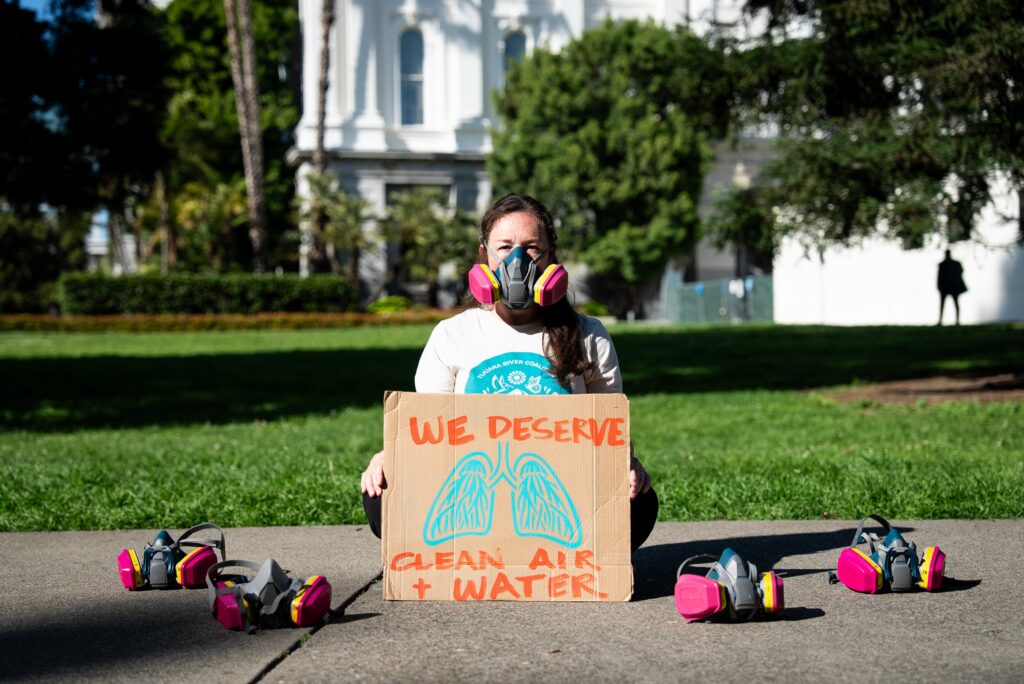
Please join us in calling on CA elected officials to take decisive action now by signing and sharing this petition!
 Spanish
 English